
🌳 Ep. 225: Three Mile Island Accident Memory Mnemonic
👋 Intro
Hello and welcome to this episode of the podcast, "The Mnemonic Memory", where we add a single mnemonic leaf to our Tree of Knowledge.
I’m Jans, your Mnemonic Man, and today's episode will be on the Three Mile Island accident, the biggest of its kind in the United States to this date.
As of March 28, 2026, it will be 45 years since the disaster, in which the core of Unit 2 was damaged and partially melted down. This sent fear, panic and confusion through the local community and surrounding areas with radiation released and frantic work conducted to control the situation and prevent further disaster.
The crisis began at 4.00 am in the morning when there was a malfunction of a relief valve in the cooling system. This caused the reactor to overheat and the fuel rods to partially melt down. Though the damage to the core was significant, the plant’s containment building prevented most of the radioactive material from escaping.
But this was no open and shut case. Material did escape, and radioactive levels varied greatly following the accident. To add to this, a hydrogen bubble had formed at the top of the reactor vessel, which had the potential to explode and thus breach the containment building and cause a full meltdown.
To get an idea of all the implications, ramifications and skullduggery that followed the meltdown, I highly recommend you watch the Netflix series that was released in 2022 called “Meltdown: Three Mile Island,” which gives you a greater understanding as to what the residents went through and the usual machinations that occur when power and money are involved.
Today’s mnemonic will be on the top five facts about the Three Mile Island accident.
So, with that being said, we will begin with a summary from Wikipedia.
📖 Wikipedia Summary
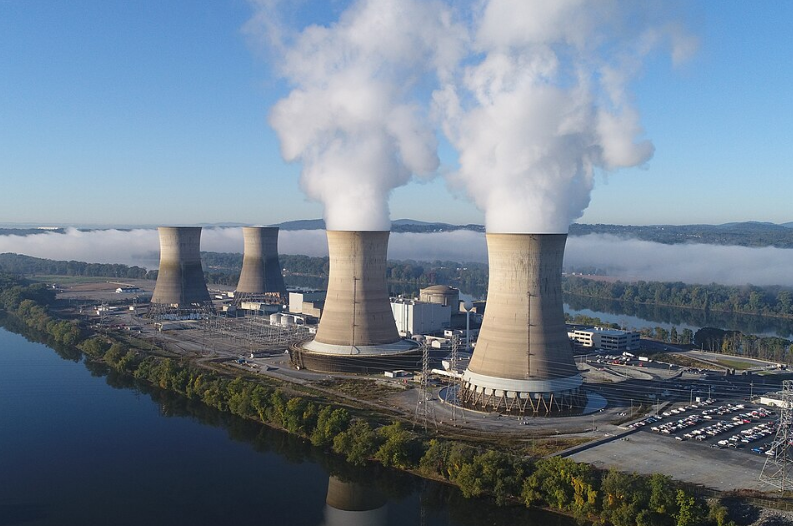
The Three Mile Island accident was a partial nuclear meltdown of the Unit 2 reactor (TMI-2) of the Three Mile Island Nuclear Generating Station, located on the Susquehanna River in Londonderry Township, Dauphin County near Harrisburg, Pennsylvania. The reactor accident began at 4:00 a.m. on March 28, 1979, and released radioactive gases and radioactive iodine into the environment.[2][3]
It is the worst accident in U.S. commercial nuclear power plant history, although its small radioactive releases had no detectable health effects on plant workers or the public.[4] The accident was the largest release of radioactive material in U.S. history until it was exceeded by the Church Rock uranium mill spill four months later.[5] On the seven-point logarithmicInternational Nuclear Event Scale, the TMI-2 reactor accident is rated Level 5, an "Accident with Wider Consequences".[6][7]
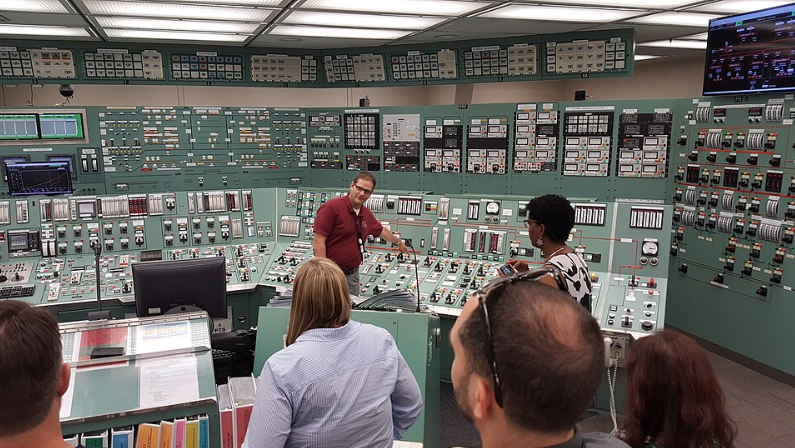
The accident began with failures in the non-nuclear secondary system,[8] followed by a stuck-open pilot-operated relief valve (PORV) in the primary system,[9] which allowed large amounts of water to escape from the pressurised isolated coolant loop. The mechanical failures were compounded by the initial failure of plant operators to recognise the situation as a loss-of-coolant accident (LOCA).
TMI training and operating procedures left operators and management ill-prepared for the deteriorating situation caused by the LOCA. During the accident, those inadequacies were compounded by design flaws, such as poor control design, the use of multiple similar alarms, and a failure of the equipment to indicate either the coolant-inventory level or the position of the stuck-open PORV.[10]
The accident heightened nuclear safety concerns among the general public and led to new regulations for the nuclear industry. It accelerated the decline of efforts to build new reactors.[11] Cleanup at TMI-2 started in August 1979 and officially ended in December 1993, with a total cost of about $1 billion (equivalent to $2 billion in 2025).[20]
TMI-1 was restarted in 1985, then retired in 2019 due to operating losses. It is expected to return to service in either 2027 or 2028 as part of a deal to power Microsoft data centres.[21][22]
Extracted from: [https://en.wikipedia.org/wiki/Three_Mile_Island_accident]
🧠 Memory Mnemonic
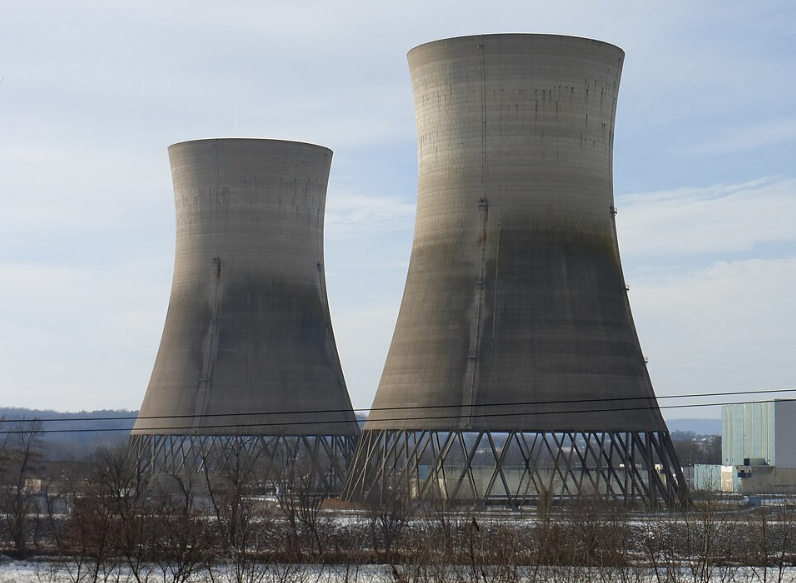
Three Mile Island Accident – Top 5 Facts Memory Mnemonic – ORFAN
(Picture the partial meltdown of reactor unit number two, leaving reactor unit number one the orphan of the Three Mile Island nuclear plant.)
1. Occurred in Londonderry Township, Pennsylvania, in 1979
2. Relief valve was stuck open on the cooling system
3. Fuel rods overheated and melted down partially
4. After 14 years and a cost around $1 billion, cleanup was complete
5. No immediate deaths
🔎 Five Fun Facts
1. There were two nuclear reactors on Three Mile Island. TMI-1, which was commissioned in 1974, and TMI-2, which was commissioned in 1978. From the beginning, TMI-2 was problematic. It was subject to unscheduled shutdowns due to leaks, and following the accident, it was revealed that managers had deliberately falsified data about the reactor in order to keep the plant operational.
2. At approximately 4 a.m. on March 28, 1979, a feedwater pump failed to send water to the steam generator, which prompted both the turbine generator and the TMI-2 reactor itself to automatically shut down as a built-in safety precaution. To reduce the pressure and heat building up within the reactor, a valve was opened to vent steam and then closed when the temperature returned to a safe level. However, this valve never closed, though the instrumentation suggested otherwise.
3. This caused the reactor to continue heating up, and with no coolant available, the core was exposed, thus causing major damage. It is estimated that approximately 2 million people were exposed to excess radiation as a result of the accident. While an estimated 140,000 people left the area of their own volition.
4. Hollywood also played a part in this incident. Just 12 days before the accident, the movie The China Syndrome was released, which starred Michael Douglas and Jane Fonda. The film’s plot involved a nuclear power plant cover-up following a meltdown. The unfortunate timing fuelled both public fear and media attention.
5. This accident had major ramifications for the nuclear industry in the United States. The Nuclear Regulatory Commission strengthened safety rules, operator training, and emergency preparedness requirements. While the expansion of nuclear plants was effectively halted, with over 50 U.S. reactors cancelled between 1980 and 1984. This situation was made even more challenging following the Chernobyl disaster in 1986.
.jpg)

.jpg)
🎓 Three-Question Quiz
Q.1. SpellPennsylvania
Q.2. What is the capital of Pennsylvania, which is not far from Three Mile Island?
Q.3. What U.S. president visited the site shortly after the accident to reassure the public?
Bonus Q. Which federal agency oversees nuclear plant safety in the U.S.?
Bonus Q. Why should you never trust atoms?
🧠 Memory Mnemonic Recap
Three Mile Island Accident – Top 5 Facts Memory Mnemonic – ORFAN
(Picture the partial meltdown of reactor unit number two, leaving reactor unit number one the orphan of the Three Mile Island nuclear plant.)
1. Occurred in Londonderry Township, Pennsylvania, in 1979
2. Relief valve was stuck open on the cooling system
3. Fuel rods overheated and melted down partially
4. After 14 years and a cost around $1 billion, cleanup was complete
5. No immediate deaths
🎓 Three-Question Quiz Answers
Q.1. SpellPennsylvania
A. Pennsylvania
Q.2. What is the capital of Pennsylvania, which is not far from Three Mile Island?
A. Harrisburg
Q.3. What U.S. president visited the site shortly after the accident to reassure the public?
A. Jimmy Carter
Bonus Q. Which federal agency oversees nuclear plant safety in the U.S.?
A. The Nuclear Regulatory Commission (NRC)
Bonus Q. Why should you never trust atoms?
A. Because they make up everything! Apparently, you should never argue with them as well. They split easily!
🔤 Word of the Week
[ey-lee-uh-tawr-ee]
adjective:
from accidental causes or chance
Example
The aleatory combination of mechanical failure and human error during the Three Mile Island accident led to an unexpected partial nuclear meltdown.
Extracted from: [https://www.dictionary.com/]
💡 Memory Tip
For our memory tip today, we will be talking about Number Mnemonics, which encompass memory techniques that help people remember numbers by converting them into easier-to-remember images, words, or patterns.
Instead of trying to recall abstract numbers, the idea is to link these numbers to a meaningful association. Some common systems include:
· the rhyme system – for example, one is bun, two is shoe, and three is tree
· the shape system – for example, one can be a candle, two looks like a swan, and three looks like handcuffs
· the major system – which converts numbers into sounds. For example, 2 is n, 3 is m, and 4 is r.
These methods work because the brain remembers visual images and stories better than raw numbers and are great for remembering dates and phone numbers. See you next week
👉 Free Memory Mnemonics at:
https://www.themnemonictreepodcast.com
🎧 Listen on Apple Podcasts:
https://podcasts.apple.com/au/podcast/the-mnemonic-tree-podcast/id1591795132
🎧 Listen on Spotify:
https://open.spotify.com/show/3T0LdIJ9PBQMXM3cdKd42Q?si=fqmaN2TNS8qqc7jOEVa-Cw
🔗 References
https://chatgpt.com/c/69a800b8-3fc8-8322-9a6b-ea52a14fb75a
https://www.mentalfloss.com/history/three-mile-island-nuclear-accident-history-facts
https://chatgpt.com/c/69b23b68-2b18-8399-8152-19b33a58e822
https://smileloverz.com/nuclear-puns/
https://www.energy.gov/ne/articles/5-facts-know-about-three-mile-island