🌳 Ep. 224: Charles Darwin – Top 5 Facts Memory Mnemonic
👋 Intro
Hello and welcome to this episode of the podcast, "The Mnemonic Memory", where we add a single mnemonic leaf to our Tree of Knowledge.
I’m Jans, your Mnemonic Man, and today's episode will be on the father of evolution, Charles Darwin.
Charles Darwin was born in Shrewsbury, England, in 1809 to his father Robert Darwin, a medical doctor and financier, and Susannah Darwin, previously Wedgwood, who was a keen amateur botanist, and the daughter of famed potter Josiah Wedgwood.
Darwin studied both medicine and theology before finding his passion in natural history. He spent much of his youth collecting beetles, rocks and plants, and learnt taxidermy from John Edmonstone, a freed enslaved person.
His big break came in 1931 when he was recommended to be the naturalist on the HMS Beagle. It was a five-year surveying voyage that launched his scientific career and would eventually form the foundation for his theory of evolution by natural selection.
The voyage included many countries, some of which included: Brazil, Argentina, Uruguay, Chile, Peru, Ecuador, Atlantic Islands such as Cape Verde and Canary Islands, Pacific and Oceania including Tahiti, New Zealand, and Australia, and South Africa, and Mauritius.
Following his journey, Darwin toiled for over 20 years working on his vast collection from the trip, collecting more, and gathering more evidence for his theory. Darwin nearly missed the proverbial boat when he received a letter from Alfred Russel Wallace, who independently developed a similar theory. In the end, Darwin and Wallace presented joint papers on the theory to the Linnean Society of London on July 1, 1858.
In 1859, Darwin published On the Origin of Species, which laid the foundation for modern evolutionary biology. While his later works included The Descent of Man, which applied evolutionary theory to human origins.
And to just finish of the summary, it would be criminal not to mention the salacious fact that Darwin did marry his first cousin, Emma Wedgwood. They had ten children, and believe it or not, Darwin prudently studied the effects of cousin marriage as well.
Today’s mnemonic will be on the top five facts about Charles Darwin.
So, with that being said, we will begin with a summary from Wikipedia.
📖 Wikipedia Summary
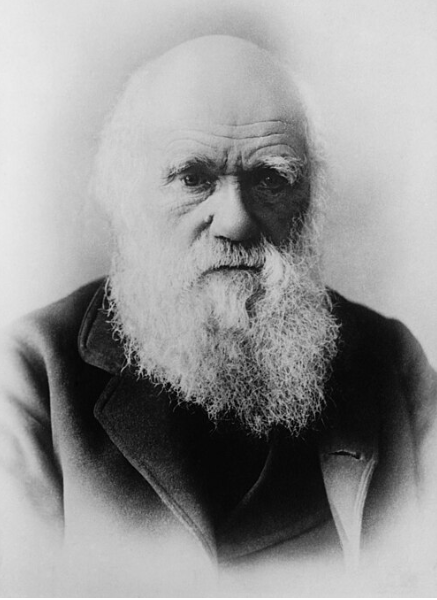
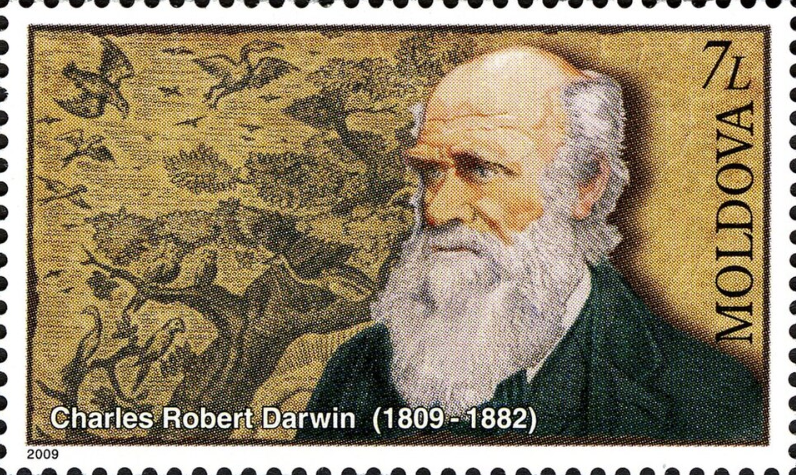
Charles Robert Darwin (/ˈdɑːrwɪn/[5] DAR-win; 12 February 1809 – 19 April 1882) was an English naturalist, geologist, and biologist,[6] widely known for his contributions to evolutionary biology. His proposition that all species of life have descended from a common ancestor is now generally accepted and considered a fundamental scientific concept.[7]
In a joint presentation with Alfred Russel Wallace, he introduced his scientific theory that this branching pattern of evolution resulted from a process he called natural selection, in which the struggle for existence has a similar effect to the artificial selection involved in selective breeding.[8] Darwin has been described as one of the most influential figures in human history and was honoured by burial in Westminster Abbey.[9][10]
Darwin's early interest in nature led him to neglect his medical education at the University of Edinburgh; instead, he helped Robert Edmond Grant to investigate marine invertebrates. His studies at the University of Cambridge's Christ's College from 1828 to 1831 encouraged his passion for natural science.[11]
However, it was his five-year voyage on HMS Beagle from 1831 to 1836 that truly established Darwin as an eminent geologist. The observations and theories he developed during his voyage supported Charles Lyell's concept of gradual geological change. Publication of his journal of the voyage made Darwin famous as a popular author.[12]
Puzzled by the geographical distribution of wildlife and fossils he collected on the voyage, Darwin began detailed investigations and, in 1838, devised his theory of natural selection.[13]
He was writing up his theory in 1858 when Wallace sent him an essay that described the same idea, prompting the immediate joint submission of both their theories to the Linnean Society of London.[15] Darwin's work established evolutionary descent with modification as the dominant scientific explanation of natural diversification.[16]
Darwin published his theory of evolution with compelling evidence in On the Origin of Species (1859).[17][18] Darwin's discovery is the unifying theory of the life sciences, explaining the unity and diversity of life.
Extracted from: [https://en.wikipedia.org/wiki/Charles_Darwin]
🧠 Memory Mnemonic
Charles Darwin – Top 5 Facts Memory Mnemonic – BHP TaB
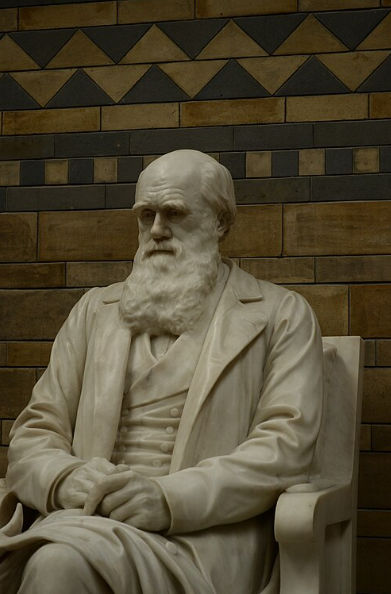
(Picture Charles Darwin being sponsored by the giant oil company BHP to sail around the world to source more oil under the guise of evolutionary biology.)
1. Born in Shrewsbury, England, in 1809
2. HMS Beagle voyage was from 1831 to 1836
3. Published On the Origin of Species in 1859
4. The theory of Evolution by Natural Selection, he developed
5. Buried in Westminster Abbey in 1882
🔎 Five Fun Facts
1. Charles Darwin was born into intellectual curiosity. His Maternal grandfather, Josiah Wedgwood, was a prominent industrialist and anti-slavery campaigner, while his paternal grandfather, Erasmus Darwin, was a physician and also an early thinker on evolution. He actually wrote a book in 1794 called “Zoonomia” and wrote the following: “Would it be too bold to imagine, that all warm-blooded animals have arisen from one living filament…?”
2. Darwin initially followed in his father’s footsteps and studied medicine at the University of Edinburgh. This was not to be, though, as he struggled with the slicing and dicing of surgery. He later studied theology at Cambridge, intending to become a country clergyman, but by this time his interest was entrenched in the natural world.
3. The HMS Beagle is inextricably linked to Charles Darwin; however, this ship had three main voyages. The first voyage surveyed Patagonia and Tierra del Fuego in South America under Pringle Stokes. The second voyage surveyed South America and completed a global navigation. While the third voyage surveyed large parts of the Australian coast under commander John Lort Stokes.
Charles Darwin was on the second voyage and only had an unofficial role to observe geology, collect specimens, and document the natural world.
4. Darwin spent a total of five weeks in the Galapagos. He arrived in September 1835 and visited four islands now known as San Cristóbal, Floreana, Isabela, and Santiago. Darwin observed that animals on different islands were similar, but not identical. They showed subtle variations depending on their island, suggesting that species were not fixed but adapted to their environments over time.
5. It took Darwin over 20 years to publish his theory of evolution. This was for a number of reasons. Firstly, he was continually gathering evidence, testing, and refining his thinking. Secondly, he was extremely apprehensive about the potential backlash from the scientific and religious establishment, and thirdly, the potential impact on his reputation and personal life, which was suffered by his grandfather, Erasmus.


🎓 Three-Question Quiz
Q.1. What groundbreaking book did Charles Darwin publish in 1859?
Q.2. What theory is Darwin best known for developing?
Q.3. What did Darwin originally study at university before focusing on natural history?
Bonus Q. Where is Charles Darwin buried?
🧠 Memory Mnemonic Recap
Charles Darwin – Top 5 Facts Memory Mnemonic – BHP TaB
(Picture Charles Darwin being sponsored by the giant oil company BHP to sail around the world to source more oil under the guise of evolutionary biology.)
1. Born in Shrewsbury, England, in 1809
2. HMS Beagle voyage was from 1831 to 1836
3. Published On the Origin of Species in 1859
4. The theory of Evolution by Natural Selection, he developed
5. Buried in Westminster Abbey in 1882
🎓 Three-Question Quiz Answers
Q.1. What groundbreaking book did Charles Darwin publish in 1859?
A. On the Origin of Species
Q.2. What theory is Darwin best known for developing?
A. The theory of evolution by natural selection
Now, I take umbridge to this theory of evolution by natural selection, and I’m pretty sure I can prove it wrong. Now hear me out. Where I come from, we have lots of hummingbirds, and they have existed for thousands of years, and to this day … they still haven’t learnt the words!
Q.3. What did Darwin originally study at university before focusing on natural history?
A. He studied medicine at the University of Edinburgh and later theology at the University of Cambridge
Bonus Q. Where is Charles Darwin buried?
A. Westminster Abbey in London
🔤 Word of the Week
platitude
[plat-i-tood, -tyood]
noun
a flat, dull, or trite remark, especially one uttered as if it were fresh or profound.
Example
Some people think it’s a platitude to say that Charles Darwin changed the way we understand life on Earth.
Extracted from: [https://www.dictionary.com/]
💡 Memory Tip
For our memory tip today, we will be talking about Association Mnemonics. Association mnemonics are memory techniques that link new information to something already known. By creating a mental connection through images, stories, and sounds, you make recall easier and more natural.
The brain remembers linked material far better than isolated facts. These associations can be visual, as in pictures, verbal, as in rhymes, or contextual, as in relating to personal experiences.
A simple example could be to remember that Mars is known as the Red Planet. So, picture a chocolate bar melting on a hot red planet, and when you look closely, it has the brand “MARS” stamped on it in bright red letters.
· The red colour reminds you it’s the Red Planet
· The chocolate bar name reminds you of Mars
See you next week.
👉 Free Memory Mnemonics at:
https://www.themnemonictreepodcast.com
🎧 Listen on Apple Podcasts:
https://podcasts.apple.com/au/podcast/the-mnemonic-tree-podcast/id1591795132
🎧 Listen on Spotify:
https://open.spotify.com/show/3T0LdIJ9PBQMXM3cdKd42Q?si=fqmaN2TNS8qqc7jOEVa-Cw
🔗 References
https://kids.kiddle.co/Charles_Darwin
https://www.galapagossafaricamp.com/galapagos-history/charles-darwin-facts/#
https://www.charlesdarwin.net/facts.jsp